Prep and Pre-Prep: Where Britain's Royal and Aristocratic Children Actually Go to School
Long before Eton, every royal child passes through a pre-prep and prep school first. Here is exactly where three generations of royals, and the wider aristocracy, have gone.
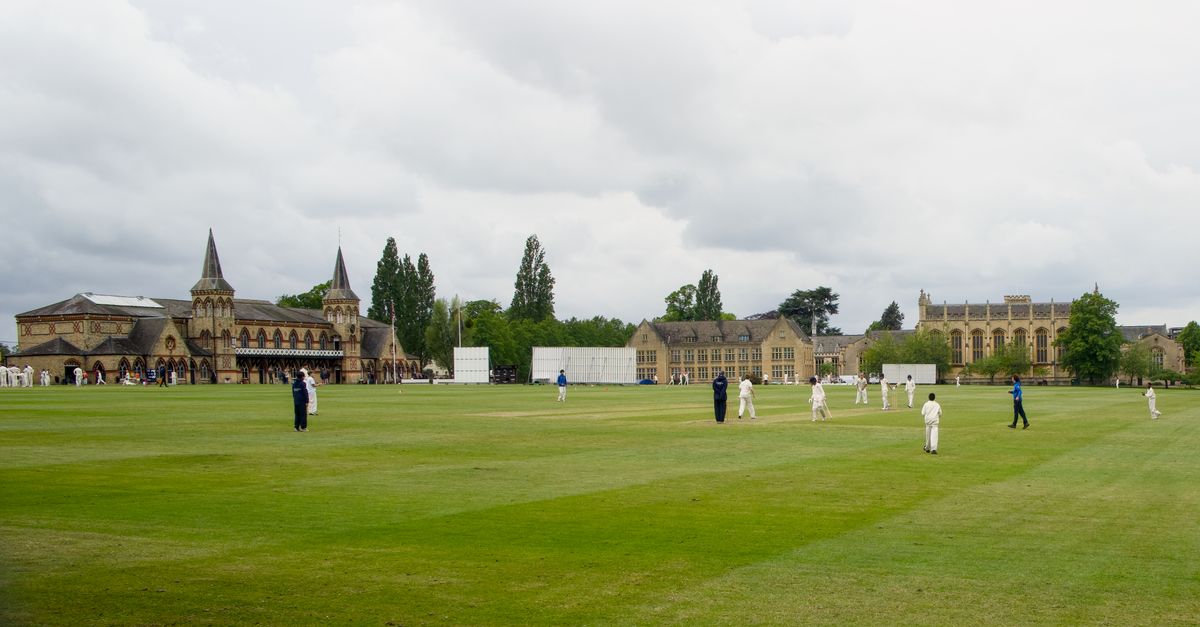
Prince George’s first day at Eton made headlines around the world this month, but Eton is only ever the last stop on a much longer journey. Before any royal child sits an entrance exam for a senior school, they spend nine years or more moving through a system most people outside Britain have never had to learn: pre-prep, then prep, each one chosen almost as carefully as the school that follows it. For Prince George, Princess Charlotte and Prince Louis, that journey has already run through a Norfolk nursery, a red-brick building in Battersea, and 52 acres of Berkshire parkland, and it looks remarkably similar to the path their father and uncle walked thirty years earlier.
What “prep” and “pre-prep” actually mean
Pre-prep covers roughly ages four to seven or eight, taking in what most other countries would call nursery, reception and the first couple of years of primary school. Prep school picks up from there and runs to eleven or, more commonly for boys aiming at the traditional public schools, to thirteen. The whole point of the name is in the word itself: these schools exist to prepare a child for the Common Entrance Examination and a place at an independent senior school. Many prep schools run their own pre-prep department on the same site, so a child can join at four and not change schools again until they are eleven or thirteen. Others, like the family Wetherby group in London, are pre-prep only, and pupils then move on to a separate prep school elsewhere. It is a two-stage system built entirely around one outcome: a strong Common Entrance result and a smooth handover to senior school.
Thomas’s Battersea, then Lambrook: the Wales children’s own path
Prince George started at Thomas’s Battersea in September 2017, and Princess Charlotte joined him there in September 2019, both wearing the school’s navy and red uniform with its red unicorn crest. Thomas’s Battersea is a well-regarded London day school rather than a boarding prep, popular with families who want a strong academic grounding without sending a child away from home at seven or eight. That changed in 2022. When the family moved from Kensington Palace to Adelaide Cottage on the Windsor estate, George, Charlotte and Prince Louis all transferred together to Lambrook School in Berkshire that September, the first time the three siblings had ever attended the same school at once. Lambrook sits on 52 acres with its own swimming pool, golf course and outdoor learning areas, and the move was reported at the time as a deliberate decision to put the children’s school life ahead of anything else once the family relocated out of London.
Wetherby, then Ludgrove: the path William and Harry took
A generation earlier, Prince William and Prince Harry followed a strikingly similar two-stage pattern, just with different names attached. Both started at Wetherby School in Notting Hill, a pre-prep for boys aged four to eight that Princess Diana herself walked them into on their first days. From Wetherby, both boys moved on to Ludgrove School, a boys’ boarding prep in Berkshire founded in 1892 specifically to prepare pupils for Eton. William began boarding at Ludgrove in 1990, and Harry followed in 1992. Both went on from Ludgrove to Eton College, the same school their own children and nephew would attend decades later. The shape of it (a London day pre-prep followed by a boarding prep in the Home Counties) is close enough to what George, Charlotte and Louis have followed that it barely needed updating for a new generation.
Hill House, Cheam, Gordonstoun: how King Charles’s schooling differed
King Charles’s own path looked nothing like his grandsons’. He started as a day boy at Hill House School in Knightsbridge in 1956, but lasted only a matter of months before moving to Cheam Preparatory School, where his father Prince Philip had studied before him. Charles boarded at Cheam from age eight until he was thirteen, then followed Philip again to Gordonstoun in Scotland, a school built around outdoor endurance and cold-water discipline that suited his father far better than it suited him. Charles has spoken candidly in later life about how unhappy he was there, in sharp contrast to his brother Andrew, who thrived under the same regime a few years afterward. It is one of the clearest examples in the family of how a school chosen for one child does not automatically work for the next.
Benenden, and the rest of the family’s wider choices
Princess Anne broke new ground simply by attending a school at all: she was the first woman in the family sent away to be educated alongside other pupils rather than taught at home by a governess, enrolling at Benenden School in Kent in 1963 and leaving in 1968 with six O-Levels and two A-Levels. Zara Tindall, Anne’s daughter, followed a more conventional prep-to-senior path a generation later, attending Beaudesert Park School in Gloucestershire and Port Regis in Dorset before moving on to Gordonstoun, the same senior school her grandfather Philip and uncle Charles had attended. Princesses Beatrice and Eugenie started together at Upton House and St George’s School near Windsor, with Eugenie later boarding at Marlborough College, one of the small number of schools that spans both the girls’ senior boarding tradition and, since going fully co-educational, boys as well.
How wider aristocratic and titled families make the same choice
Away from the immediate royal family, Britain’s wider aristocracy tends to sort into a fairly predictable set of names once children reach prep and senior school age. Girls from titled families are disproportionately likely to end up at Wycombe Abbey, Cheltenham Ladies’ College or Marlborough College, three schools with long-standing reputations for combining academic rigour with a certain social continuity between families. Boys who do not follow the Eton route often go to Harrow, Radley or Winchester instead, each with its own distinct character but all playing broadly the same role Eton plays for the family: a known quantity, chosen partly because parents, uncles and grandparents went there too, and partly because the alumni network and teaching style are already familiar and trusted. None of this is unique to titled families exactly, but the concentration of the same handful of names across generations of the same families is far higher than in the population as a whole.
Day school, boarding, and why the Wales children stayed closer to home
The clearest shift in how royal parents choose schools today is the move away from very early boarding. Charles was sent away from home at eight and has said plainly that he did not enjoy it. William and Catherine have made the opposite choice deliberately, keeping George, Charlotte and Louis in day schools for as long as practical, first in London and now from Adelaide Cottage. Proximity mattered directly in the 2022 decision: the family did not simply pick Lambrook because they liked it in the abstract, they picked a school within a short drive of their new home once they had decided to leave London, and continuity of ethos between Thomas’s Battersea and Lambrook (both academically rounded, both used to a certain level of public attention) was very much part of that decision too. Security and privacy also weigh heavily on any royal school choice: a school used to press interest and able to manage it discreetly, whether that is Thomas’s careful handling of school-gate photography rules or Lambrook’s rural setting away from central London traffic, tends to rank as highly as academic results once a family’s surname is Windsor.
Why it still matters
The pattern across four generations is less about any one school and more about what each choice reveals: Philip and Charles believed hardship built character, Diana believed a gentler, more normal childhood mattered more, and William and Catherine have leaned further still toward keeping their children close, ordinary and unboarded for as long as they reasonably can. Watching where a royal child goes to school, in other words, has always been a fairly reliable way of watching how that generation of parents actually wants to raise their children. For more on what comes after prep school, read our history of royal education from governesses to Eton, or browse our Royal Figures stories for more on the people behind the institution.
Frequently asked questions
What is the difference between a pre-prep and a prep school?
Pre-prep covers roughly ages four to seven or eight, similar to nursery and the earliest years of primary school. Prep school follows on from there and runs to eleven or thirteen, ending with the Common Entrance Examination that secures a place at a senior school. Many schools run both stages on one site; others, like Wetherby, are pre-prep only.
What school do Prince George, Princess Charlotte and Prince Louis attend?
George and Charlotte first attended Thomas’s Battersea in London. All three children moved together to Lambrook School in Berkshire in September 2022, after the family relocated to Adelaide Cottage on the Windsor estate.
Where did Prince William and Prince Harry go to prep school?
Both attended Wetherby School in Notting Hill for pre-prep, then moved on to Ludgrove School, a boarding prep school in Berkshire, before going on to Eton College.
Where did King Charles go to school as a child?
Charles started at Hill House School in Knightsbridge, then moved to Cheam Preparatory School as a boarder from age eight, before attending Gordonstoun in Scotland from thirteen.
Did Princess Anne attend a boarding school?
Yes. Anne was the first woman in the royal family sent to a school rather than taught at home, boarding at Benenden School in Kent from 1963 to 1968.
Why did the Wales children move schools in 2022?
When Prince William and Catherine relocated from Kensington Palace to Adelaide Cottage in Windsor, they moved George, Charlotte and Louis to Lambrook School, which is close to their new home, so all three could attend together for the first time.
What schools do aristocratic families typically choose?
Titled families tend to favour a fairly consistent set of schools: Wycombe Abbey, Cheltenham Ladies’ College and Marlborough College for girls, and Harrow, Radley or Winchester as alternatives to Eton for boys, often because previous generations of the same families attended them.
Has royal boarding changed over time?
Yes. Charles was sent away to board at eight and has spoken about disliking it. William and Catherine have kept their own children in day schools for longer, choosing Lambrook partly for its closeness to their Windsor home rather than sending them away to board at a young age.
Details of royal and aristocratic schooling are drawn from published royal biographies, school records and contemporary reporting; described as of 2026.