The King's Christmas Broadcast: A Royal Tradition Since 1932
Every Christmas Day, the monarch addresses the nation - a tradition begun by George V in 1932, written by Rudyard Kipling, and still broadcast today.
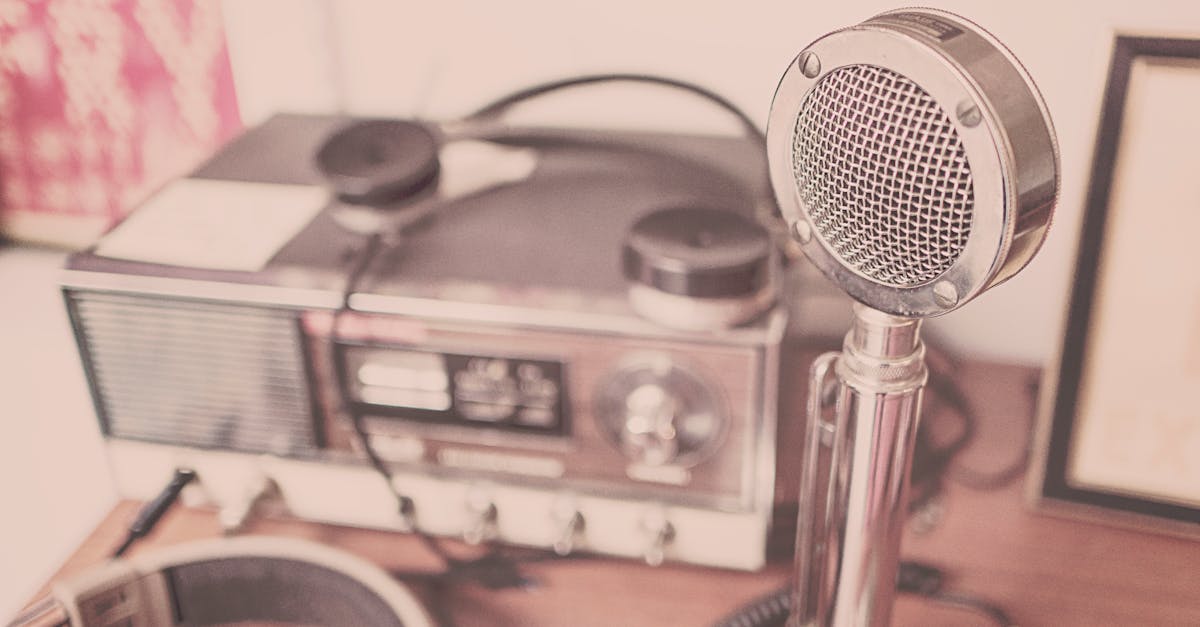
At three o’clock every Christmas afternoon, a particular kind of national quiet descends across Britain, as millions pause whatever they are doing to watch the monarch’s Christmas Broadcast. It is one of the oldest continuously observed royal traditions in modern life, a moment of direct, personal address from Sovereign to subject that has now run, in one form or another, for nearly a century.
What began as an experimental piece of radio technology in 1932 has become something far more enduring: an annual reflection on the year just passed, delivered personally by the monarch, and one of the very few moments when the whole country listens to the same voice at the same time.
Here is the story of the Christmas Broadcast, from its 1932 origins to the tradition King Charles III continues today.
The first broadcast, 1932
The tradition began on Christmas Day 1932, when King George V spoke live over the wireless to the British Empire from a small office at Sandringham House. The idea had been proposed that year by Sir John Reith, the BBC’s founding director-general, keen to inaugurate the new Empire Service (now the BBC World Service) with a genuinely historic broadcast.
The speech itself was written by Rudyard Kipling, the celebrated author, lending the very first Christmas message real literary weight. It reached an estimated twenty million listeners across the Empire: an extraordinary audience for the still-young medium of radio, and an instant demonstration of just how powerfully a single royal voice could unite a scattered, global audience.
A tradition that took hold
What began as a one-off experiment quickly became an annual fixture. George V’s broadcasts continued each Christmas until his death in 1936, and the tradition passed to his successors, becoming, within a generation, one of the fixed points of the British Christmas, as expected each year as the turkey or the pudding.
Each monarch has used the broadcast slightly differently, but its essential purpose has remained constant: a personal reflection on the year, an acknowledgement of hardship or achievement, and a message of unity addressed directly to the public, cutting through the usual formality of royal communication.
1957: the first televised broadcast
The broadcast’s next great milestone came in 1957, when Queen Elizabeth II delivered the first televised Christmas message, allowing the public to see as well as hear their monarch for the very first time. It was a landmark moment for both the monarchy and for television itself, and, in a lovely piece of symmetry, it fell exactly on the twenty-fifth anniversary of her grandfather’s original 1932 broadcast.
The 1957 broadcast drew an audience of 16.5 million television viewers in Britain alone, alongside a further 9.5 million radio listeners. At the time, that was a larger combined audience than any other programme had ever achieved. The Queen herself spoke of embracing this “new medium” with evident awareness of the moment’s significance.
A message that evolves with the times
Over the decades, the Christmas Broadcast has evolved considerably in tone and format, from formal, scripted addresses to more personal, reflective messages, often featuring recorded footage from the year’s royal engagements alongside the monarch’s own words. Each year’s broadcast typically touches on themes of unity, resilience and gratitude, responding to whatever the nation has lived through in the preceding twelve months.
That flexibility has helped the tradition remain relevant across nearly a century of enormous social change: a fixed ritual whose content adapts, year on year, to speak meaningfully to the moment.
King Charles III’s broadcasts
Since his accession, King Charles III has continued the tradition, delivering his own Christmas messages from Sandringham in the same spirit of reflection and address to the nation that his mother and great-grandfather established before him. Each broadcast carries forward not just a message but an unbroken institutional memory stretching back to 1932.
That continuity is itself part of the broadcast’s power: a new monarch’s first Christmas message is always watched with particular interest, a moment of genuine transition made visible through a tradition that has otherwise remained remarkably stable.
Why the tradition endures
The Christmas Broadcast endures because it offers something genuinely rare in modern public life: a moment when an entire nation, however divided on other matters, pauses together to hear directly from its head of state. Nearly a century after George V first spoke into a wireless microphone at Sandringham, the ritual retains real emotional weight.
That is its lasting significance: proof that some traditions, however modest their technological origins, become genuinely woven into the fabric of national life. Browse more of our Royal Figures stories to explore the traditions that have shaped the modern monarchy.
Frequently asked questions
When was the first royal Christmas Broadcast?
The first royal Christmas Broadcast was delivered by King George V on Christmas Day 1932, broadcast live over radio from Sandringham House to the British Empire, and written by the author Rudyard Kipling.
When was the first televised Christmas Broadcast?
Queen Elizabeth II delivered the first televised Christmas Broadcast in 1957, drawing 16.5 million UK television viewers and 9.5 million radio listeners. Coincidentally, that was exactly twenty-five years after her grandfather’s original 1932 broadcast.
Who wrote the first Christmas Broadcast?
The first Christmas Broadcast, delivered by King George V in 1932, was written by the celebrated author Rudyard Kipling.
Why did the Christmas Broadcast begin?
The tradition began at the suggestion of Sir John Reith, the BBC’s founding director-general, who wanted a historic broadcast to inaugurate the new Empire Service, now known as the BBC World Service.
What time is the King’s Christmas Broadcast?
The Christmas Broadcast is traditionally shown at three o’clock in the afternoon on Christmas Day, a timing that has remained consistent for decades.
Does King Charles III still give a Christmas Broadcast?
Yes. King Charles III continues the tradition established in 1932, delivering his own Christmas message from Sandringham each year in the same spirit of reflection and national address.
Details of the Christmas Broadcast tradition are drawn from royal.uk, Sandringham Estate and widely published historical sources; described as of 2026.