King Willem-Alexander & Prinsjesdag, Explained
Every third Tuesday of September, King Willem-Alexander rides through The Hague to open the Dutch parliamentary year with a speech, a plumed hat and a horse-drawn coach.
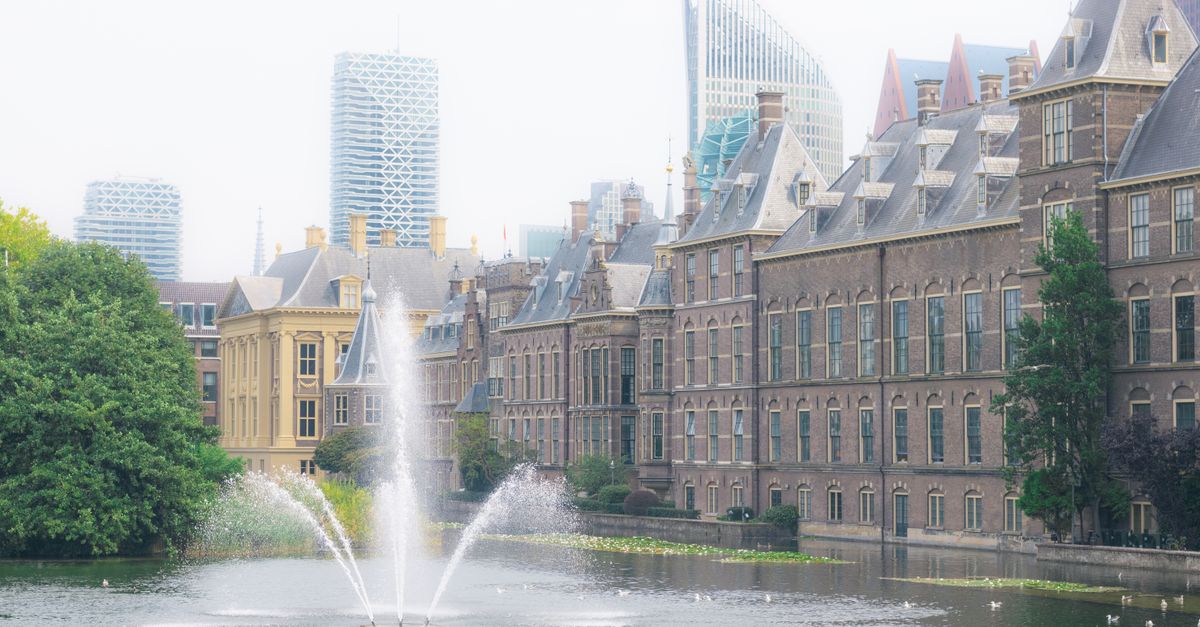
Every third Tuesday of September, the streets around the Binnenhof in The Hague fill early. Orange pennants line the route, brass bands tune up outside the Royal Theatre, and by mid-morning King Willem-Alexander steps out in full ceremonial dress to open a new session of the Dutch parliament. This is Prinsjesdag, or Prince’s Day, one of the oldest fixed rituals in Dutch public life and the moment the country’s head of state and its government share a stage in front of the cameras.
For a monarchy that otherwise keeps a famously low profile, Prinsjesdag is the one day a year when pageantry and policy sit side by side. The king delivers a speech that is not his own words but the government’s programme for the year ahead, read from the throne in a hall built for exactly this purpose.
Below is a closer look at Prinsjesdag itself, the coaches that have carried Dutch monarchs to it, and the wider rhythm of King Willem-Alexander’s reign, from his 2013 accession to the national holiday that marks his birthday each spring.
What is Prinsjesdag
Prinsjesdag falls on the third Tuesday of September every year, a date fixed by the Dutch constitution rather than chosen for convenience. It marks the formal opening of the parliamentary year, when the King addresses a joint sitting of the Senate and House of Representatives.
The day’s centrepiece is the Troonrede, the Speech from the Throne. Despite being delivered by the King, the speech is written by the government and sets out its plans and budget priorities for the coming year. It is, in effect, a constitutional handshake: the monarch lends the moment its formality, while the elected government supplies the substance. Alongside the speech, the Minister of Finance presents the state budget in a small ceremonial suitcase, a separate tradition that has run for decades.
Crowds gather along the processional route hours before the King and Queen Maxima appear, many dressed in the national colour for the occasion. Government ministers, judges and senior officials attend in formal dress, and the day closes with royal balcony appearances and public celebrations that carry a distinctly festive, rather than solemn, tone. For a country that rarely puts its monarchy on display, Prinsjesdag remains the clearest annual reminder of how the crown and parliament work together.
Where the Troonrede is delivered
For most of the twentieth century, the Troonrede was read inside the Ridderzaal, the Hall of Knights at the heart of the Binnenhof complex, a Gothic hall dating back to the thirteenth century and one of the most recognisable buildings in Dutch political life. Its high timber roof and stained glass have framed the ceremony in countless photographs.
Since 2022, the joint session has instead taken place at the Koninklijke Schouwburg, the Royal Theatre in The Hague, while the Binnenhof undergoes a lengthy renovation. Officials have indicated the theatre will remain the venue at least until the Binnenhof’s work concludes, expected toward the end of the decade. The change has not altered the substance of the day, only its backdrop, and the procession still winds through the same historic streets before and after the speech.
The Golden Coach and its long rest
Few royal vehicles carry as much history as the Golden Coach. Presented to Queen Wilhelmina in 1898 as a gift from the people of Amsterdam, the ornately gilded carriage became a fixture of Prinsjesdag processions for more than a century, instantly recognisable for its sweeping curves and painted panels depicting allegorical scenes.
One of those panels, an 1898 work titled Homage of the Colonies, has prompted years of public debate in the Netherlands. Its imagery, read today, sits uneasily with modern understanding of the colonial era it references. The coach was withdrawn from ceremonial use in 2015 for a lengthy restoration, and in 2022 King Willem-Alexander confirmed it would not return to the road for the foreseeable future, saying it would only do so once society is ready to see it that way again. The coach itself has not been altered or hidden away; it remains part of the national collection and has been the subject of public exhibitions exploring its history in full context.
It is a graceful resolution to a genuinely difficult question, and one that reflects how the Dutch monarchy tends to handle its more complicated heirlooms: openly, patiently, and without erasing the past it represents.
The Glass Coach steps in
In the Golden Coach’s absence, Prinsjesdag has been carried, quite literally, by the Glass Coach. Delivered to King Willem I in 1826, the coach takes its name from its large glazed windows, which let crowds see the monarch clearly as the carriage passes, a design that was considered strikingly modern for its time.
Drawn by eight horses from the Royal Stables and driven with the same ceremonial precision applied to every element of the day, the Glass Coach now carries the King and Queen along the short route between the royal residence and the Binnenhof each September. It appears in the day’s official photographs and in the crowds’ phone footage now, in the same spot the Golden Coach once occupied. Its own bicentenary fell only recently: Dutch royal tradition has more than one grand carriage in its history.
Koningsdag, the other big date
If Prinsjesdag is the formal, political side of Dutch royal life, Koningsdag is its opposite: a loud, informal, orange-clad street party held every 27 April to mark King Willem-Alexander’s birthday. The date has moved with the monarchy for well over a century, first celebrated as Princess’s Day for a young Wilhelmina in 1885, then shifted to honour Juliana and later Beatrix, before settling on Willem-Alexander’s own birthday after his 2013 accession.
Unlike Prinsjesdag, Koningsdag has no fixed ceremonial script. Cities and towns across the Netherlands host free markets, live music and open-air gatherings, and the King and his family traditionally spend the morning visiting a different Dutch town each year, mixing with crowds in a way that would look out of place on Prinsjesdag. The two dates show two sides of the same monarchy: solemn and constitutional in September, warm and accessible in April.
From Crown Prince to King
Willem-Alexander’s path to the throne followed the pattern his mother and grandmother had set before him. Queen Beatrix, who had reigned since 1980, announced in January 2013 that she intended to abdicate in favour of her eldest son, continuing a Dutch royal habit of stepping aside rather than reigning until death. She signed the instrument of abdication on 30 April 2013, and Willem-Alexander was sworn in the same day, becoming the first Dutch king in over a century.
He arrived at the role with an unusually practical grounding in it. Long before his accession, he had built a public reputation around water management, chairing UN advisory bodies on the subject, a fitting interest for the future monarch of a country that has spent centuries negotiating with the sea. Queen Maxima, born in Argentina, became his consort, and their eldest daughter, Catharina-Amalia, became Princess of Orange and heir to the throne. Together, the family has shaped a monarchy that keeps the constitutional formality of Prinsjesdag intact while presenting a noticeably more modern, visible public face than earlier generations of the House of Orange-Nassau.
A monarchy of two moods
Taken together, Prinsjesdag and Koningsdag say something honest about how the Netherlands has chosen to keep its monarchy. One day is built entirely around restraint, a scripted speech, a formal coach, a hall or theatre full of officials in dark suits. The other is built around noise, colour and proximity, a King wandering a market square in an orange scarf. Few European monarchies hold both registers so comfortably, and fewer still have handled an object as loaded as the Golden Coach with so little drama. The House of Orange-Nassau seems more interested in getting things right slowly than in getting them over with quickly. That may be exactly what a modern constitutional monarchy is for.
Frequently asked questions
When is Prinsjesdag held each year?
Prinsjesdag is always held on the third Tuesday of September, a date set by the Dutch constitution rather than chosen year to year.
What is the Troonrede?
The Troonrede, or Speech from the Throne, is the government’s annual policy programme, read aloud by the King during the Prinsjesdag ceremony even though the words themselves are written by ministers.
Why isn’t the Golden Coach used anymore?
The Golden Coach has been out of ceremonial use since 2015 for restoration, and King Willem-Alexander confirmed in 2022 that it would remain retired until, in his words, society is ready for it to return, owing to colonial-era imagery on one of its panels.
What coach is used instead of the Golden Coach?
The Glass Coach, delivered to King Willem I in 1826 and named for its large windows, now carries the King and Queen to and from the Prinsjesdag ceremony.
Where does the King deliver the Troonrede now?
Since 2022, the joint session and Troonrede have been held at the Koninklijke Schouwburg, the Royal Theatre in The Hague, while the traditional venue, the Ridderzaal, undergoes renovation.
What is Koningsdag and when is it celebrated?
Koningsdag, or King’s Day, is celebrated on 27 April to mark King Willem-Alexander’s birthday, with free markets and open-air festivities held across the Netherlands.
When did Willem-Alexander become king?
Willem-Alexander became King of the Netherlands on 30 April 2013, when his mother, Queen Beatrix, abdicated after a 33-year reign.
Is Prinsjesdag a public holiday?
No, Prinsjesdag is not a public holiday in the Netherlands; schools and most businesses operate as normal, with the ceremony itself broadcast for those who wish to watch.
This article draws on the Dutch Royal House’s official website, royal-house.nl, alongside Dutch parliamentary sources. The Troonrede’s venue is expected to remain the Koninklijke Schouwburg for as long as the Binnenhof renovation continues; readers should check current reporting closer to any given Prinsjesdag for the latest arrangements.