Royal Engagement Rings and the Stories Behind Them
A sapphire treasured by two Princesses of Wales, a ring a prince designed himself, a rare Kashmir stone chosen in the woods: the romantic histories behind the most admired royal engagement rings.
Few pieces of jewellery are studied, copied and adored quite like royal engagement rings. They are photographed from every angle, recreated in high-street windows within days of a proposal, and pored over by admirers who can tell a Ceylon sapphire from a Burmese ruby at a glance. Yet the lasting appeal of these rings has never really been about carat weight. It is about the stories they carry.
Behind each one sits a moment of romance: a prince proposing in the woods, a young naval officer borrowing his mother’s tiara, a son weaving his late mother into the design so that she might still be present. The stones are extraordinary, but it is the meaning set alongside them that turns a ring into an heirloom.
What follows is a celebration of the most admired royal engagement rings and the histories that make them so beloved: the famous and the rarely seen, the headline sapphires and the quieter family treasures.
The sapphire treasured by two Princesses of Wales
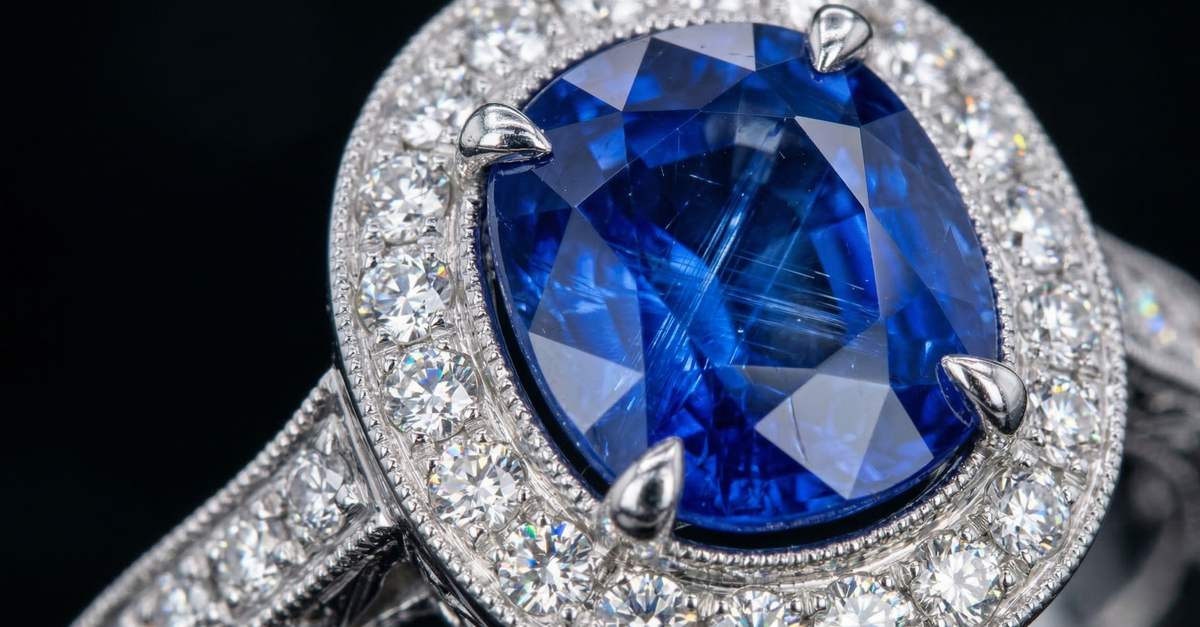
The most recognised royal engagement ring of the modern age is the oval Ceylon sapphire cluster worn today by Catherine, Princess of Wales. At its centre sits a sapphire of roughly twelve carats, encircled by a halo of fourteen solitaire diamonds and set in white gold. It is a design of such balance that it has launched countless imitations.
Its first chapter belongs to Lady Diana Spencer. When she became engaged to Prince Charles in 1981, Garrard, then the Crown jeweller, presented a selection of rings, and Diana chose this sapphire cluster herself from the existing collection rather than commissioning a one-off piece. The choice raised a few eyebrows at the time, yet it gave the ring an unusually personal beginning.
In 2010, Prince William used the same ring to propose to Catherine Middleton, describing it as his way of keeping his mother close to the happiness of the day. Worn now by a second Princess of Wales, the sapphire has become a tender thread running between two generations.
Queen Elizabeth II’s diamond solitaire
Queen Elizabeth II’s engagement ring is one of the great love stories told in stone. When Prince Philip proposed in the years following the war, he gave her a three-carat round brilliant-cut diamond solitaire, flanked by smaller diamonds set into a platinum band, a design he is widely credited with helping to shape himself.
What makes the ring so touching is its provenance. The diamonds came from a tiara belonging to Philip’s mother, Princess Alice of Battenberg, who gave up the heirloom so that her son might create something worthy of his future bride. The jeweller Philip Antrobus of Bond Street is generally credited with the commission, and the surplus stones were fashioned into a matching bracelet given ahead of the wedding.
Elizabeth wore the ring every day for the rest of her long life, a modest, deeply personal piece chosen by a young man with little fortune but a great deal of devotion.
The Queen Mother’s Kashmir sapphire
Long before the Wales sapphire, another blue stone captured royal hearts. In January 1923, the future King George VI, then the Duke of York, proposed to Lady Elizabeth Bowes-Lyon during a walk through the woods at her family home in Hertfordshire, a setting as romantic as any in the royal canon.
The ring he gave her is reported to have featured a rare sapphire, often described as a Kashmir stone prized for its soft cornflower-blue colour, set between two diamonds on a platinum band. Accounts of the exact stones vary, but the impression of quiet elegance is consistent across them.
Interestingly, the Queen Mother did not wear this ring for the whole of her life. By the 1940s she was often photographed with a large pearl-and-diamond ring instead, a reminder that even the most storied royal pieces sometimes give way to a new favourite over the decades.
Meghan, Duchess of Sussex’s trilogy ring
When Prince Harry proposed to Meghan Markle in 2017, he designed the ring himself, and the result is rich with personal meaning. It is a trilogy ring, a three-stone setting whose stones are traditionally said to represent a couple’s past, present and future, originally set on a slender yellow-gold band.
The central cushion-cut diamond was sourced from Botswana, a country of special significance to the couple, who travelled there together early in their relationship. The two stones flanking it were drawn from Princess Diana’s own collection, a gesture Harry described as a way of keeping his mother part of the day. Around their first wedding anniversary the ring was reset onto a diamond-studded band, refreshing the design while keeping every meaningful stone in place.
It is a thoroughly modern royal ring, bespoke, personal and quietly sentimental.
Sarah, Duchess of York’s Burmese ruby
Not every royal bride has chosen a diamond or a sapphire. When Prince Andrew became engaged to Sarah Ferguson in 1986, he gave her a striking ruby, reportedly a Burmese stone of around three carats, encircled by ten diamonds arranged in a flower-like cluster.
The choice was praised as wonderfully individual. Red, rather than the more customary blue or white, set the ring apart, and the bloom-shaped setting nodded affectionately to Sarah’s auburn colouring. Crafted, like Diana’s sapphire, by the house of Garrard, it remains one of the most distinctive royal engagement rings of the twentieth century, proof that a confident departure from tradition can become a classic in its own right.
Princess Eugenie’s padparadscha sapphire
The ruby’s story has a charming sequel. When Jack Brooksbank proposed to Princess Eugenie in 2018, he chose a ring inspired by that of her mother, Sarah, and selected one of the rarest stones in the jeweller’s world.
At its heart is a padparadscha sapphire, an exquisite gem prized for its delicate pinkish-orange glow and usually found in Sri Lanka. The oval stone is framed by a halo of diamonds and flanked by two further pear-shaped diamonds, giving it both warmth and brilliance. Like the Queen Mother’s and the Duchess of York’s rings, it favours colour over the conventional white diamond, a reminder that the royal family’s love of distinctive coloured stones runs through several generations.
A small vessel of memory
What unites these rings is that none is really about the stone alone. Each is a keepsake of a particular love: a sapphire that links two Princesses of Wales, a tiara remade for a young queen, a mother honoured in two small diamonds, a rare gem chosen to echo another bride’s ring.
That is the royal way with jewellery. The settings change and the fashions shift, but the truest gem is always the story. It is why these pieces are admired long after the proposals that inspired them, and why each new royal ring is welcomed as the opening line of a fresh romance.
Browse our Royal Style & Fashion stories to discover more of the looks and jewels that capture the world’s attention.
Frequently asked questions
Which royal engagement ring is the most famous?
The sapphire cluster worn by Catherine, Princess of Wales, is the most famous of the modern age. It features an oval Ceylon sapphire of around twelve carats surrounded by a halo of diamonds, and was originally Princess Diana’s engagement ring from 1981 before Prince William used it to propose in 2010.
Why does Catherine wear Princess Diana’s ring?
Catherine wears the ring because Prince William chose to propose with his late mother’s sapphire as a way of keeping her close to the occasion. The ring has since become a cherished link between two Princesses of Wales.
What was special about Queen Elizabeth II’s engagement ring?
Its diamonds came from a tiara belonging to Prince Philip’s mother, Princess Alice of Battenberg. Philip helped design the three-carat solitaire himself using those heirloom stones, making it a deeply personal gift that the Queen wore for the rest of her life.
What stone is in Meghan, Duchess of Sussex’s ring?
The central stone is a cushion-cut diamond sourced from Botswana, a place special to her and Prince Harry. It is flanked by two diamonds from Princess Diana’s collection in a trilogy setting that was later reset onto a diamond band.
Did the Queen Mother have a sapphire engagement ring?
Yes. When the future King George VI proposed in 1923, he gave Lady Elizabeth Bowes-Lyon a sapphire ring, often described as featuring a rare Kashmir stone flanked by diamonds. In later years she was frequently seen wearing a pearl-and-diamond ring instead.
Who made Princess Diana’s sapphire engagement ring?
The ring was made by Garrard, then the Crown jeweller, in 1981. Diana chose it from the firm’s existing selection rather than having a bespoke piece created.
Why is Princess Eugenie’s ring so unusual?
It centres on a padparadscha sapphire, a very rare gem with a soft pinkish-orange glow usually found in Sri Lanka. Jack Brooksbank chose it as a nod to the coloured-stone ring worn by Eugenie’s mother, Sarah, Duchess of York.
Do royal brides always choose diamonds?
No. The royal family has a long love of coloured stones, from the sapphires worn by Catherine and the Queen Mother to Sarah Ferguson’s ruby and Princess Eugenie’s padparadscha sapphire.
Details of royal jewels are drawn from widely published accounts including Garrard, The Court Jeweller, Hello! and Natural Diamonds; some specifics, such as exact carat weights and stone origins, vary between sources and have been hedged accordingly.


