The Most Iconic Royal Wedding Dresses in History
From the gown that made white the rule to Diana's fairytale train: the royal wedding dresses that changed fashion forever.
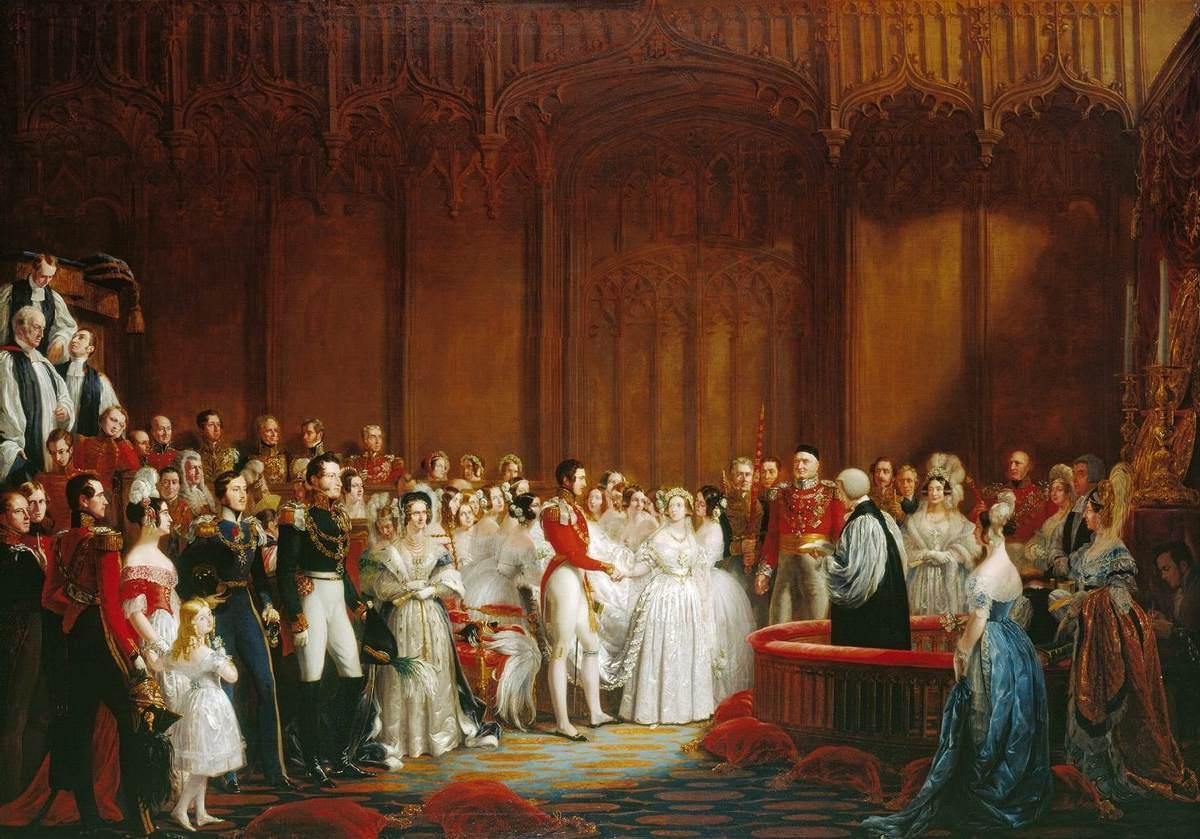
A royal wedding dress is never just a dress. It is watched by the world, copied within hours, and remembered for generations. Across nearly two centuries, a handful of royal gowns have done more than dazzle. They have changed the way the rest of us marry.
Before Victoria: colour, splendour and political meaning
For most of royal history, a bride wore her finest, not necessarily her whitest. Medieval and Tudor queens chose rich jewel tones (crimson, cloth of gold, deep blue) chosen to broadcast dynastic wealth and political alliance rather than any notion of purity. When Mary, Queen of Scots married Francis II of France in 1558, she caused a minor scandal by wearing white, the colour of mourning in France at the time. She wore it anyway. Royal brides dressed for power, and the choice of fabric, colour, and embroidery carried messages that every watching court could read. Silk from Lyon, Flemish lace, pearls sewn by the hundred: these were statements of sovereignty as much as sentiment.
The dress that made white the rule
We owe the white wedding to Queen Victoria. When she married Prince Albert in 1840 in a full-skirted ivory-white silk satin gown, white was not the obvious choice for a bride: it was expensive to keep clean, easily marked, and conspicuously impractical. That, in part, was the point. Victoria chose to wear Honiton lace, a delicate point de gros application worked by around two hundred lacemakers in Devon, specifically to support the struggling British lace industry. The lace trimmed the bodice, the flounce of the skirt, and the long court train. An orange blossom wreath completed the picture.
The dress was so admired, and so widely reproduced in the illustrated press, which was then reaching its first great popular audience, that it set a fashion that has endured for nearly two centuries. Portraits and fashion plates circulated across Britain, Europe, and America. Within a generation, white had become the expected colour for a respectable bride. Nearly every white wedding dress worn today is, in a sense, a descendant of Victoria’s.
The twentieth century: Bowes-Lyon, Hartnell and Princess Anne
The century that followed produced a distinguished succession of royal gowns. When Lady Elizabeth Bowes-Lyon married the Duke of York in 1923, her gown (a simple, straight-cut medieval-style dress in ivory chiffon moiré, with a square neck and trailing sleeves) chimed perfectly with the Arts and Crafts romanticism of the age. She carried white heather from Scotland and white roses, and paused on the way into Westminster Abbey to lay her bouquet on the tomb of the Unknown Warrior, a spontaneous gesture that has since become a royal tradition.
Princess Margaret, whose style was always deliberately modish, chose Norman Hartnell for her 1960 wedding to Antony Armstrong-Jones. The gown was a masterwork of restraint: pure white, V-necked, with a full skirt and a simplicity that set it apart from the heavily embroidered state robes Hartnell had designed for her sister’s coronation. It was bridal dressing at its most coolly elegant.
Princess Anne took a different approach in 1973, wearing a Tudor-inspired high-necked gown with a fitted bodice, long sleeves with a pointed cuff, and a long, embroidered train, designed by Maureen Baker of Susan Small. It was striking rather than soft, announcing with characteristic forthrightness that this princess was nobody’s ingénue.
Diana’s fairytale
No royal gown has caused a greater sensation than Princess Diana’s in 1981. Designed by David and Elizabeth Emanuel, the ivory silk taffeta dress was famously kept secret until the moment Diana stepped from the Glass Coach at St Paul’s Cathedral, and then the world held its breath. The voluminous puff sleeves, the sweetheart neckline, the hand-embroidered sequins and lace: all of it spoke the language of pure fairytale. The train, approximately twenty-five feet of ivory silk taffeta edged in antique lace, was the longest in royal wedding history, and it emerged from the carriage in a somewhat crumpled state (the price, it turned out, of fitting so much fabric into so small a space). Diana smoothed it with characteristic composure and walked on.
Replicas were being stitched within hours of the ceremony, and by the following morning the high street was already responding. The Emanuels had delivered the dress that defined eighties bridal fashion: romantic, theatrical, unabashedly extravagant. David Emanuel has since described the secrecy around the commission as extraordinary: sketch pads hidden, fabric swatches locked away, because both he and Diana understood that a single leaked photograph could change everything.
A modern classic: Catherine and Alexander McQueen
When Catherine married Prince William in 2011, the anticipation surrounding her dress was intense enough to be a news event in itself. She chose Sarah Burton of Alexander McQueen, and the result was greeted as an instant modern classic. The ivory and white satin gown drew on Carrickmacross lace-making traditions (a technique dating to the 1820s) and featured a hand-stitched bodice overlaid with Cluny lace whose motifs of English roses, Scottish thistles, Welsh daffodils, and Irish shamrocks paid quiet tribute to all four nations of the United Kingdom. The padded hips referenced the Victorian silhouette; the long sleeves were both modest and elegant; the nine-foot train was generous without excess.
What Burton achieved was a gown that felt ceremonially correct and supremely wearable at once, a balance very few royal dresses have managed. The Kate Effect, so well documented in Catherine’s everyday fashion choices, was never more powerful: lace sleeves surged back into bridal collections everywhere, and the Carrickmacross craft experienced a modest but genuine revival.
Meghan’s two dresses at Windsor
Meghan, Duchess of Sussex, offered something no recent royal bride had attempted: two entirely different dresses for two entirely different moments. For the ceremony at St George’s Chapel in 2018, she wore a strikingly pared-back gown by Clare Waight Keller for Givenchy: clean lines, a bateau neckline, absolutely no ornament on the body of the dress itself. The drama was reserved entirely for the veil: five metres of silk tulle hand-embroidered with the floral emblems of all fifty-three Commonwealth nations, each worked in white thread with a golden centre. It was modern minimalism given extraordinary depth of meaning.
For the evening reception at Frogmore House, Meghan changed into a sleek, halterneck gown by Stella McCartney in pure white high-creponne silk: fluid, relaxed, and deliberately informal beside the morning’s grandeur. The two-dress approach acknowledged, in the most elegant way possible, that a royal wedding in the twenty-first century could hold more than one version of its bride.
What makes a royal wedding dress fashion history
A royal wedding dress becomes fashion history through a convergence of forces that have no real parallel elsewhere. First, the scale of the audience: the weddings of Diana, Catherine, and Meghan were watched by hundreds of millions of people simultaneously, creating a global moment of shared attention. Second, the immediacy of reproduction: from illustrated newspapers in Victoria’s day to social media live-streams in Meghan’s, the dress reaches the high street within hours. Third, the designer’s story: a royal commission can define a career, as Sarah Burton’s work for Catherine illustrated. And fourth, the woman herself: her choices, the political or personal symbolism she weaves into fabric and needlework, the way she carries herself down the aisle.
Each of these gowns reflects its moment precisely because the woman wearing it understood, consciously or not, that she was making more than a personal choice. She was shaping taste.
A living tradition
The history of the royal wedding dress is not finished. It is a tradition that reinvents itself with every generation, absorbing new influences, responding to new politics, surprising even the most seasoned watchers. That is its enduring vitality. From Victoria’s Honiton lace to Meghan’s Commonwealth veil, every stitch has been a conversation between a woman, her world, and the millions who are watching.
Details of designers and gowns are drawn from widely published accounts; some specifics vary between sources.
Frequently asked questions
Which royal bride first wore white?
Queen Victoria is credited with establishing the white wedding dress as a fashion norm after her 1840 wedding, though Mary, Queen of Scots controversially wore white to her 1558 French wedding. Victoria’s gown, widely reproduced in the press, made white the aspirational choice for brides across Britain and beyond.
Who designed Princess Diana’s wedding dress?
Diana’s iconic 1981 gown was designed by the husband-and-wife team David and Elizabeth Emanuel. The commission was kept strictly secret, with sketches locked away and fabric swatches concealed, until Diana stepped from the Glass Coach at St Paul’s Cathedral.
What was special about the lace on Catherine’s dress?
Sarah Burton of Alexander McQueen incorporated Carrickmacross lace (an Irish technique dating to the 1820s) into the gown’s overlaid bodice. The motifs included roses, thistles, daffodils, and shamrocks representing England, Scotland, Wales, and Ireland respectively, each hand-stitched by Royal School of Needlework craftswomen.
Did Meghan wear more than one dress on her wedding day?
Yes. For the morning ceremony at St George’s Chapel, Meghan wore a Givenchy gown by Clare Waight Keller with a Commonwealth-embroidered veil. For the evening reception at Frogmore House, she changed into a halterneck gown by Stella McCartney.
Why did Queen Victoria choose Honiton lace?
Victoria deliberately chose lace made in Devon’s Honiton district to support the struggling British lace industry, which faced competition from machine-made alternatives. Around two hundred lacemakers worked on the commission, and the patronage brought significant attention to the craft.
What is the longest train in royal wedding history?
Princess Diana’s 1981 train, approximately twenty-five feet of ivory silk taffeta, is widely recorded as the longest in royal wedding history. Its sheer length meant it emerged from the Glass Coach somewhat crumpled, though Diana proceeded with her customary composure.
How did royal wedding dresses influence mainstream fashion?
The mechanism has remained consistent since Victoria’s day: global media attention, immediate illustrated or photographic reproduction, and the aspirational power of royalty combined to send styles directly into commercial bridal collections. Catherine’s lace sleeves and Diana’s puff sleeves both produced measurable surges in high-street bridal fashion within days of their respective weddings.
What did Meghan’s veil signify?
The five-metre tulle veil worn by Meghan at the 2018 ceremony was hand-embroidered with the national flowers of all fifty-three Commonwealth nations, worked in white thread with a golden centre for each bloom. It was widely interpreted as a deliberate, inclusive statement about the breadth of the institution she was joining.


